Posts

Image
  Danish fishing boat 

Preserving Your Deep-Sea Bounty: Strategies for Sustainable Fishing

Ahoy there, fellow seafarer! Let's dive into the world of our aquatic companions and the art of responsible fishing. So, me heartie, what be ye doin' with the bountiful catch from the briny deep? Some savvy sailors follow the creed of keeping just enough for a hearty meal and lettin' the rest roam free. The choicest fish? The freshest, of course! Even if ye be no master of the galley, the local taverns can conjure up a feast fit for a sailor with your day's catch. Picture this: sittin' down to a meal of fish still wet from the sea, the perfect end to a day spent conquerin' the waves. Many a seafarer reckons it to be the most satisfyin' achievement on the high seas! Now, why should we be botherin' with conservation, ye ask? Fish, me mate, be a renewable treasure of the sea. Yet, taming the vastness of the ocean requires careful hands and clever tactics to ensure the bounty lasts for generations to come. Overfishing, a cursed menace, demands years of rule ...

Mastering the Waves: Unleashing the Power of Tides in Deep Sea Fishing

Embarking on a deep sea fishing adventure? Don't underestimate the importance of understanding the tides in your chosen fishing grounds—it's a game-changer that experts swear by. While many fishing enthusiasts may overlook this crucial aspect, seasoned guides and charter-boat captains make it a priority, conducting detailed studies on currents, tides, and their impact on fishing conditions. The Hidden Key Regrettably, many casual deep-sea anglers pay scant attention to these vital details, and some don't pay attention at all! Then, they find themselves wondering why their fellow angler is reeling in the big ones while they're left with an empty bucket. However, some anglers do recognize that tides play a role but lack a clear understanding of how and why. These anglers often waste valuable hours casting and trolling even when the tide isn't in their favor. On the flip side, those well-versed in tide knowledge can pinpoint the most opportune fishing periods in advanc...

Choosing The Right Deep Sea Fishing Charter For You

There are a lot of factors to take into consideration when picking out a deep sea charter. You do not only have to look for one that is professional and reputable, but you also have to find one that can meet your personal needs. Thus, before you go out to sea, you have to decide on exactly what it is that you really want from the trip. What Kind Of Experience? Your main concern must be to decide on the type of experience that you want to get. Is it wreck and reef fishing that you want? How about inshore fishing? Probably you’re interested in getting a charter which specializes on targeting specific types of specie, like billfish, tarpon, etc.? Factors like these would definitely depend on what place in the world you’ll be fishing in. For instance, if you’ll be fishing from the Gulf of Mexico, you would have different options if you’ll be looking for a deep sea charter in Northern California. What Kind Of Level? Second, you should decide on the level that you w...

A Deep Sea Fishing Family Guide

Deep sea fishing is one great activity that a lot of families enjoy. It’s something that can give you and your family momentous experiences and priceless memories that can last for a lifetime. The family bonding experience with nature at hand is simply indescribable. If you’re new to this sport and wonderful past time, there are some things that you should know before you go on with your deep sea fishing trip. It is indeed one big adventure for you and your family. However, you should consider some things first to make your trip a successful one. Other than not forgetting to bring your camera, for those momentous snapshots, here are some things that you have to think about before even making some plans. Judgment Time: Are They Capable? First off, you should take a realistic look at your family’s abilities and age. Let’s face it, you can’t really maximize a deep sea fishing trip if you’re kids are still infants or toddlers. If you’re deciding on what kind of exc...

Catching Trout Fish

If you are sick and tired of coming home from fishing trips empty handed, having to eat fast food instead of delicious steamed trout, then this will be the most important message you read today. There is more to fishing than you might have first thought. To be more precise, there’s more to the fish themselves and how they think, than you would have ever even considered. “At Last! A Proven Method For Catching Trout Every Time You Go Fishing!” Read More........ Catching Trout

Yellow Croaker / Red Jewfish / Silver Jewfish

Image
Local Name : Red Jewfish / Silver Jewfish  Trade Name : Yellow Croaker Scientific Name : johnius argentatus Found in coastal area of Chinese and Japanese sea. Eastern Indian Ocean and shallow water of Bay of Bengal . Silver and Red Jewfish is one of the species caught in large quantities from shallow water of Bay of Bengal.  Caught with bottom trawls, gill nets and hand lines at Sundarban area. Jewfish is  very common in the Bay of Bengal. It is one of the economically important and popular fish in Bangladesh. Most of the small size jewfish are consumed locally, some big size jewfish are exported, and the rest are sun dried for local market. Air bladders are collected by some mongers and dried for export.  There is a demand for this species in the international market in places such as China, Thailand , Middle East and other Arab countries. Present ( January 2014) average local price of medium and big size red and silver jewfis...
Image
Slipper Lobster Size : 3-4 Pcs/Kg The lobsters that most people know from their dinner plates are the American and European clawed lobsters. These are cold water species that live on either sides of the northern Atlantic Ocean. There are also tropical lobsters that are widely consumed, but these are generally claw-less varieties called spiny and slipper lobsters. Lobsters, like snails and spiders and they have 10 walking legs. Lobsters are found in all oceans. They live on rocky, sandy, or muddy bottoms of oceans. They generally live singly in crevices or in burrows under rocks. Lobsters are omnivores and typically eat live prey such as fish, molluscs, other crustaceans, worms, and some plant life. 
Image

Commercial and Organic names of marine / sea fish

Image
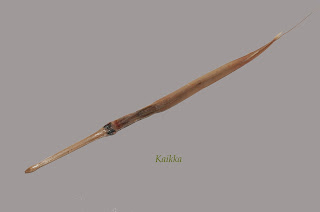
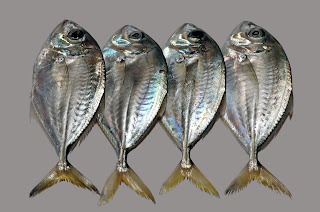
Recently, photographed and edited a number of marine/sea fish of Bangladesh. But there are some confusion about their commercial and organic names, so expecting visitors comments.  For example, I know only local name of  the following marine/sea fish.  Thanks.
Image
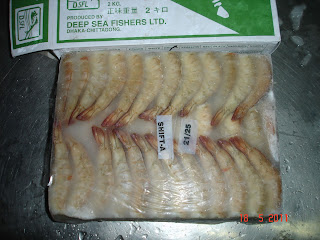
 Brown Shrimp   Tiger Shrimp (Head On)  Black Shrimp (Kiji) 

FISH & SEAFOOD IN BANGLADESH

Image
Bangladesh produces and exports a wide range of  fishes, shrimps, sea fish and other frozen food products. These may be classified into ten broad categories as noted below :                                                 Sea Going Trawler for HILSA  fish catching                                                        Marine Shrimp ( Head on Tiger )                                               Marine Shrimp ( Head Less Tiger )                                           ...

Modern Netloft Joint Venture

Image
Sea Resources Limited and Cosmos Trawl (part of Hampidjan Group), have signed an agreement to enter the 3rd phase of their Danida supported B2B project.  The new company is based at Ichanagar /Sardarghat in Chittagong, headed by Mr. Lars Jensen (Cosmos) as Managing Director. Cosmos Chief Technical Advisor Mr. Eiríkur H. Sigurgeirsson (stationed in Chittagong since January 2010), he looks after day-to-day affairs. And Mr. A. Rouf Chowdhury is the Chairman of the venture. On April 12th 2010 a ceremony of raising the ROOFTREE of the new SRL Cosmos Trawl Ltd. netloft was held. Danish Minister for Development Cooperation Mr. Søren Pind, Chittagong City Corporation Mayor ABM Mohiuddin Chowdhury, Danish Ambassador Mr. Einar H Jensen and Mr. Ib Albertsen of The Danish International Investment Funds (IFU) were present in the ceremony. On 26th June 2010 SRL Cosmos Trawl Ltd. organised a Seminar & Workshop in Chittagong to highlight latest news and developments about modern fishing...

Flora & Fauna in Bangladesh

The forests of Bangladesh cover about 10% of the country and fall distinctly into three regional varieties: the forest in the tidal zones along the coast, mostly Sundarbans (often mangrove but sometimes hardwood); the forest of Sal trees (hardwood) around Dhaka, Tangail and Mymensingh; and the forests of tropical and subtropical evergreens in the Chittagong Hill Tracts and parts of Sylhet. Half of the remaining forest is in the Chittagong Hill Tracts and a further quarter in the Sundarbans, with the rest scattered in small pockets throughout the country. Even away from the forests, Bangladesh is a land of trees. Lining the old Grand Trunk Road in the west are huge rain trees, and every village is an arboreal oasis, often with spectacular Banyan or Ashot trees. The red Silk-cotton or Kapok tree is easily spotted throughout the countryside in February and March, when it loses its leaves and sprouts a myriad of red blossoms. Teak was introduced to the Hill Tracts in the last century, an...

Fish Quality Determination (QIM)

What is Quality Index Method QIM (QIM) ? Quality Index Method QIM is an accurate and objective method for the determination of fish freshness. It is a promising method in assessing the freshness of fish in a rapid and reliable way. It is expected to become the leading reference method for the assessment of fresh fish within the European community in the future. As the QIM method has been developed and proved to be a quality assessment method that is more finely tuned than other grading methods used today, it is considered a valuable tool that may replace other methods. Further, it is being developed for more and more specific fish species, increasing its power as an overall assessment method. The QIM-Eurofish Alliance The determination of the exact QIM calibration scale must be worked out with extreme precision and must be properly validated. A quality assurance must thus be observed for the QIM method as such. For this reason the directors of the Netherlands Institute for Fisheries Re...

Hilsa (ilish) Fish of Bangladesh

There is a proverb in Bangladesh that "Gola bhora Dhan, pukur bhora mach" meaning wicker corn-bin full of paddy and ponds full of fish, but the proverb is going to be untrue as many rivers of the country are vanishing. Hilsa locally known as ilish, the fish has been designated as the national fish of Bangladesh. Body length may reach up to 60 cm, but commonly found 35 to 40 cm. A large-sized hilsa weighs about 2.75 kg. Females are usually larger than males. The hilsa is known to be a fast swimmer and matured in one to two years. Hilsa , one of the most important tropical fish, lives in the sea for most of its life, but migrates at least 1,000 km up in some river system for spawning. The fish is found in the Persian Gulf, Red Sea, Arabian Sea, Bay of Bengal, Vietnam Sea and China Sea. The riverine habitat covers the Satil Arab, and the Tigris and Euphrates of Iran and Iraq, the Indus of Pakistan, the rivers of Eastern and Western India, the Irrawaddy of Myanmar, and the P...

EEZ and Marine Resources of Bangladesh

Bangladesh has a coastline 480 km long and exclusive economic zone (EEZ) is about 322 km (200 miles) seaward from the base line. The Bay of Bengal offers a potential sources of fisheries for Bangladesh although most its vast resources yet remain unexplored. In the Bay, a total of 490 species of fish belonging to 133 families were recorded of which 65 species are of commercial importance. The stock and resources still remains unexplored due to lack of appropriate survey by competent authority.

Shrimp Hatcheries in Bangladesh

Shrimp Hatcheries in Bangladesh : There are 58 shrimp hatchery in Bangladesh most of which are located around the high salinity costal area of Cox’s Bazar and Teknaf and engaged in hatching only Black Tiger Species of Marine Shrimp. Though hatchery industry is the first stage of shrimp processing sector, it started being established in early ninety’s, which is much after development of shrimp culture and shrimp packing industries. This was mainly due to non availability of technical know-how in Bangladesh. Therefore most of the hatcheries now are operating under technical experts from India, Thailand and Philippines. Out of 58 hatcheries, 8 hatcheries are not operating since 2003-04 and the rest are reportedly operating at an average of 40 to 50 % capacity utilization. Yearly production capacity : Annual Fry production capacity of 50 hatchery units under operation is around 10 billion pcs and at present capacity utilization level they are producing about 7 billion Fry and at 25% morta...

Sea Fish of Bangladesh

List of Some Exportable Sea Fish of Bangladesh Shrimp White Pomfret Gray Pomfret Black Pomfret Dorab Indian Halibut Spanish Mackerel Datina Golden Snapper Red Snapper Indian Salmon Grouper (Spotted) Grouper(Black) John (S) Tuna Short Mackerel Chub Mackerel Black Banded Cuttle fish Tongue Sole Squid Yellow Croaker Silver Croaker Big eye Ribbon Straight Hilsha Black Eel Red Eel

Fisheries sector has been playing an important role

Almost 80% of the country's protein requirement, around 70% of exports in the primary commodity category and almost 9% of total exports come from fisheries sector. Recent years. the fisheries sector has been playing an increasingly important role in the economy uplift efforts of Bangladesh. It is a labour-intensive and quick-yielding sector which enhance growth and reduce poverty. Around 1.5 million people are directly employed in the fisheries sector of Bangladesh. Bangladesh has great potential for developing the fisheries sector. This sector contributes about 10% GDP of the agriculture. The sector includes open water , such as rivers, canals, lakes, etc., and closed water , such as ponds and flood-control field. . Showing much potential to develop as a commercial sector with employment and income generating opportunities both in the rural and urban areas. A large number of entrepreneurs have grown in the private sector in recent years.